

4 Types of Communication and Examples in Daily Life


Did you know that communication can be divided into several types? There are four common types of communication in everyday life, ranging from verbal to visual communication.
Understanding the different types of communication is important for sending and receiving messages effectively. For example, when you talk to a friend, give a presentation to a large audience, send a WhatsApp message, or read a traffic sign, you are using different forms of communication.
So, what are the types of communication based on their forms and the methods used to deliver messages? Let's explore the following examples of different types of communication!
Types of Communication and Their Examples
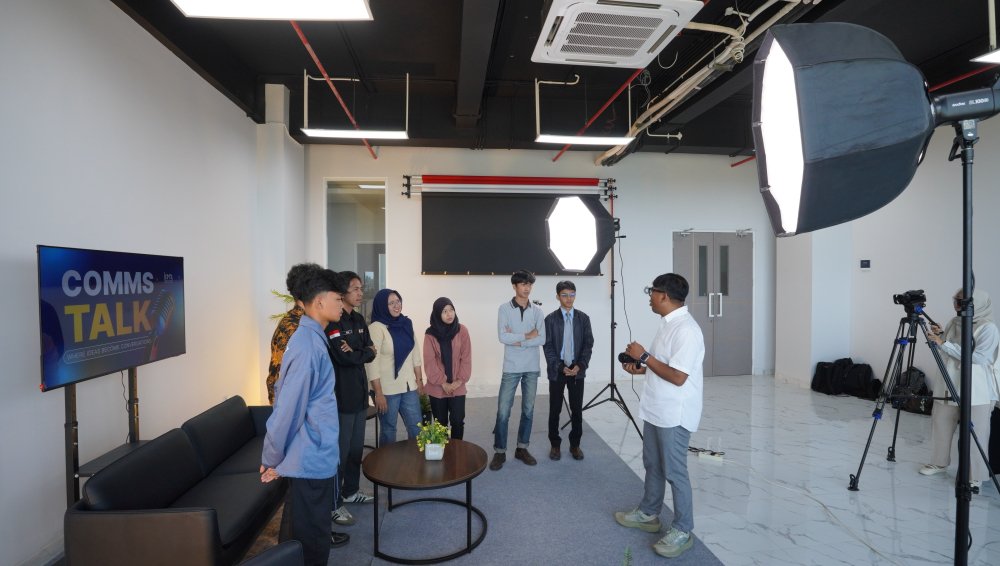
Communication is the process of sharing messages or information with others to create mutual understanding. This process can take place in different ways, depending on the purpose, situation, and media used.
Based on their form and method of delivery, there are four main types of communication:
1. Verbal Communication
According to the Indonesian Dictionary (KBBI) published by the Ministry of Primary and Secondary Education, verbal refers to something expressed orally. Therefore, verbal communication is the process of delivering messages through spoken words.
This type of communication can take place directly or through media such as telephone calls and video calls. One of its main characteristics is that you can share information directly and receive an immediate response from the other person. Here are some examples of verbal communication:
- Conversation: Talking with friends, family members, or coworkers to exchange information.
- Discussion: Sharing opinions and responding to ideas from other group members.
- Presentation: Explaining information or work results verbally to an audience.
- Interview: Answering questions from a recruiter and explaining your experience and skills.
- Speech: Delivering information or a message to a large audience at an event.
2. Nonverbal Communication
Unlike verbal communication, nonverbal communication involves delivering messages without words. Instead, it uses body movements, facial expressions, eye contact, gestures, posture, and even tone of voice.
Nonverbal communication often occurs alongside verbal communication because facial expressions and body language can influence the meaning of a message. However, the same body movement does not always have the same meaning for everyone or in every situation. Here are some examples of nonverbal communication:
- Nodding: Showing agreement or understanding.
- Smiling: Expressing friendliness, happiness, or a welcoming attitude.
- Waving: Greeting someone or saying goodbye.
- Crossing your arms: Sometimes showing a closed-off or uncomfortable attitude.
- Maintaining eye contact: Showing attention and engagement when talking to someone.
3. Written Communication
Written communication is the process of sharing information through written words, either in printed documents or on digital platforms.
Unlike verbal communication, which usually happens in real time, written communication allows the recipient to read a message at a different time. Information can also be stored, reread, used as evidence, or kept as a reference. Examples of written communication include:
- Letters: Used to share information with individuals or organizations.
- Emails: Used to communicate professionally with coworkers, clients, or managers.
- Online messages: Used to exchange information through digital conversations.
- Articles and blogs: Used to share information, knowledge, or opinions with readers.
- Reports and documents: Used to present activity results, analysis, or specific information in a structured format.
- Written announcements: Used to share information about schedules, events, or rules with a large group of people.
4. Visual Communication
As the name suggests, visual communication involves delivering messages through elements that can be seen, such as images, photographs, illustrations, charts, colors, symbols, and videos.
In the digital era, this type of communication is increasingly common because it can be more engaging and easier for audiences to understand. Even complex information can become simpler when presented through images or charts. Here are some examples of visual communication:
- Infographics: Presenting data or information in a concise visual format.
- Posters: Sharing announcements, promotions, or campaign messages through a combination of images and text.
- Logos: Serving as the visual identity of a brand, company, or organization.
- Charts: Helping explain research findings, sales developments, or data comparisons.
- Videos: Delivering messages through a combination of moving images, sound, and text.
- Traffic signs: Providing directions or warnings through specific symbols and colors.
Study Communication Science at Agung Putra University (APU)

After learning about the types of communication and their examples, you can see that communication skills are essential in every area of life. If you are interested in learning more about communication, studying Communication Science could be a great choice.
Agung Putra University (APU) offers an undergraduate Communication Science program for students who want to develop their understanding of communication, media, and how to deliver messages to different audiences.
Here are some advantages of studying Communication Science at Agung Putra University:
- Guest lectures from industry practitioners: Learn directly from people with professional experience in their industries.
- International collaborations: Gain global perspectives through activities with international partners, including student exchange visits.
- A career-oriented curriculum: Learn not only communication theories but also practical skills needed in the workplace.
- Supporting facilities: Access classrooms, a library, research laboratories, student dormitories, and a student lounge to support the learning process.
Read Also: Getting to Know Communication Science: Courses and Career Opportunities
Conclusion
Communication plays an important role in everyday life. Therefore, understanding the different types of communication is the first step toward learning how people send and receive messages. These abilities can also be developed into professional skills through education in Communication Science.
If you are interested in media, writing, public speaking, public relations, or digital communication, studying Communication Science at Agung Putra University (APU) could be the right choice.
Learn more about the study program, academic activities, and admission information by visiting the official Agung Putra University website.