Behind the Thousand Doors: German Exchange Students Explore Lawang Sewu

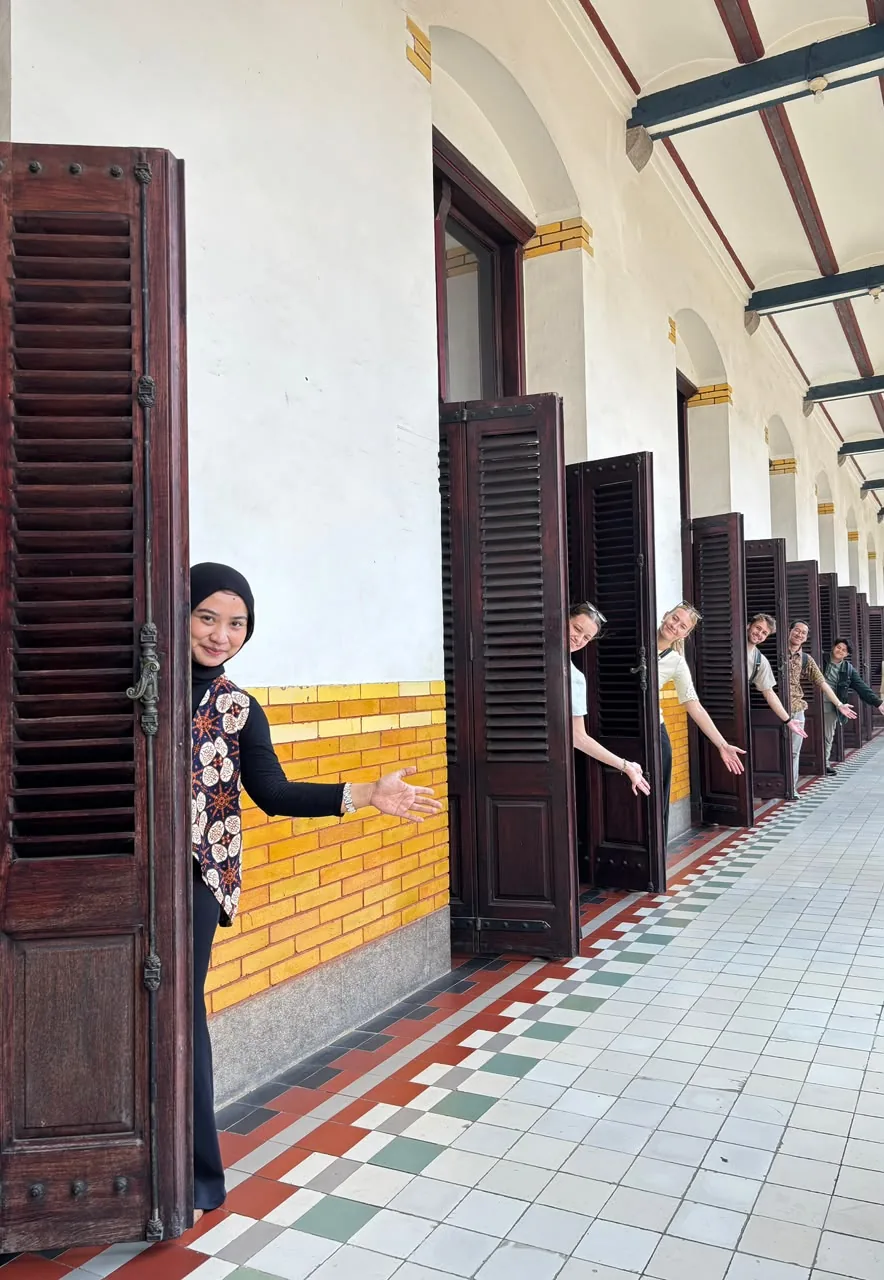
History came alive for three exchange students from Albstadt-Sigmaringen University, Germany, during a visit to Lawang Sewu in Semarang on September 4, 2026. Facilitated by the International Office of Agung Putra University (APU), the community outreach activity introduced the students to one of the city's best-known heritage landmarks and its architectural character.
Discovering a Semarang Landmark
Located in the Tugu Muda area, Lawang Sewu was originally built as the headquarters of the Nederlandsch-Indische Spoorweg Maatschappij (NIS), a private railway company in the Dutch East Indies. According to the Semarang tourism office, construction of the main building began in 1904 and was completed in 1907, with additional buildings added in later years.
Accompanied by APU International Office staff, the students explored the building's corridors, rooms, staircases, architectural details, and museum collections. Experiencing these spaces directly gave them a closer view of how Semarang's past remains visible in the city today.
More Than a Thousand Doors
The name Lawang Sewu literally means “a thousand doors” in Javanese. It refers to the landmark's many doors and openings, although the actual number is below one thousand.
“It is interesting to see how the building is still preserved and how much history is connected to one place,” said Cara, one of the exchange students.
For the students, Lawang Sewu became more than a photo stop. The visit connected railway history, architecture, and cultural heritage preservation with the experience of walking through the building itself.
Exploring History Through the Building
After Indonesian independence, Lawang Sewu was used by several institutions before returning to the railway sector. PT Kereta Api Indonesia later carried out restoration work as part of efforts to preserve the heritage site.
The students observed preserved architectural features and learned how the building has remained part of Semarang's cultural landscape through different periods. “I like how the old buildings are still here,” said Frederick.
The activity also created space for informal interaction, questions, observation, and a deeper connection with the history and identity of the city where the exchange students are staying. Cultural visits such as this complement academic activities by enabling international students to encounter Indonesia directly.
Written by ANM, APU International Office, Agung Putra University.
Contact APU International Office
- Website: apu.ac.id/international
- Email: internationaloffice@apu.ac.id
- Instagram: @apu.global