Exploring Lerep Village: Where Tradition Meets Innovation and Everyday Life

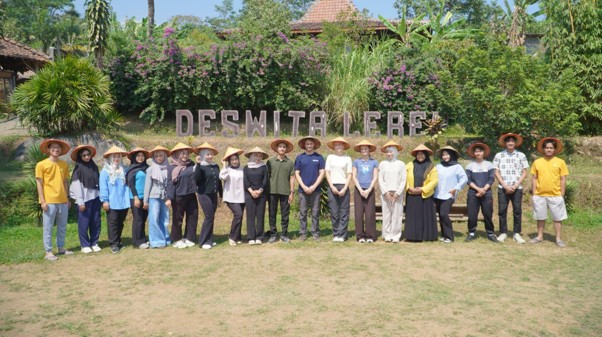
SEMARANG—International exchange students from Albstadt-Sigmaringen University Germany participated in activities at Lerep Tourism Village on September 26, 2026, together with student buddies, faculty members, and staff from the International Office of Agung Putra University (APU).
Lerep Tourism Village, located in West Ungaran Subdistrict, Semarang Regency, Central Java, is a tourism village that combines natural beauty, cultural richness, and outstanding local products. Situated in the foothills of Mount Ungaran at an elevation of approximately 497 meters above sea level, this village offers a peaceful and cool atmosphere with captivating views of the rolling hills.
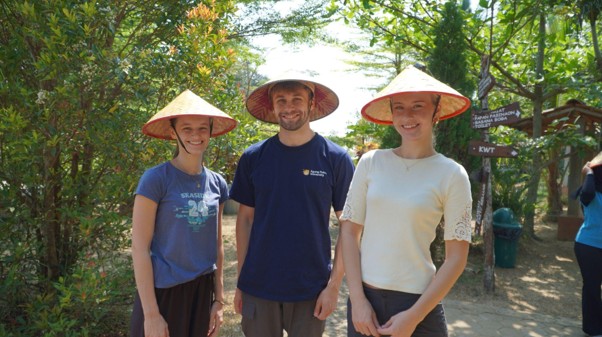
Albstadt-Sigmaringen University students-Cara, Melanie and Frederick, arrived in Lerep in the morning. Village officials and local residents welcomed them warmly, and a short introduction session followed before activities began.
A Warm Welcome Through Local Dance and Traditional Flavors
The first activity upon arrival was dancing with caping hats, which are traditional hats worn by local farmers while working in the rice fields, the dance called “Caping Gangsing”. The movements in this dance illustrate how the farmers work in the fields, wait for lunch, and socialize with one another.
Mr. Dayat, the instructor, said, “Even though we aren’t directly involved in the process of sowing, planting, and harvesting rice, at least we know what rice farmers do through this dance.”
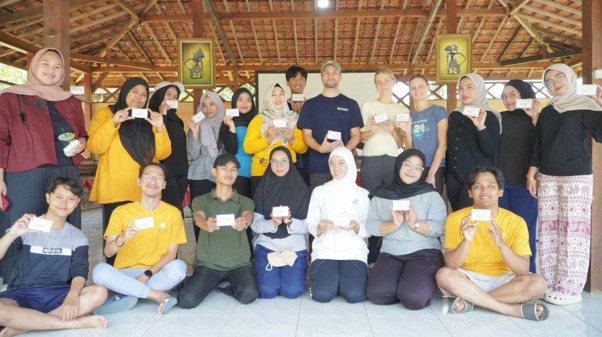
After performing the “Caping Gangsing” dance, the participants were directed to enjoy a welcome snack and drink consisting of Telang tea, Klepon, and Lemper.
“I like how refreshing the drink tastes, even though it's a little bit sourish,” said Frederick, pointing to the Telang tea.
Telang tea is made from dried telang (butterfly pea) flowers, which are then steeped in hot water. The brewed telang tea has no sweet taste and has a light flavor when drunk. To give flavor, honey or a few drops of lime or lemon juice is usually added.
The village of Lerep serves Telang tea with a squeeze of lime and basil seeds, giving it a fresh, tangy flavor while still offering health benefits.
Empowering Women Through Local Resources
After a short break to admire the green scenery around Lerep Village, the participants moved on to soap making session using cow’s milk as the main ingredient.
In the past—back in 2008 and earlier—cow’s milk production in Lerep Village was very plentiful. However, the community still lacked the means to process and utilize the available cow’s milk into a ready-to-use product that wouldn’t spoil quickly.
Later, the Ministry of Culture and Tourism (Kementerian Kebudayaan Republik Indonesia) provided guidance and training to the “Kelompok Wanita Tani” in Lerep Village on how to process cow’s milk into soap.
“The goal of this program is to empower women in Lerep Village,” said Mrs. Sulistyowati, chairwoman of the ‘Kelompok Wanita Tani’.
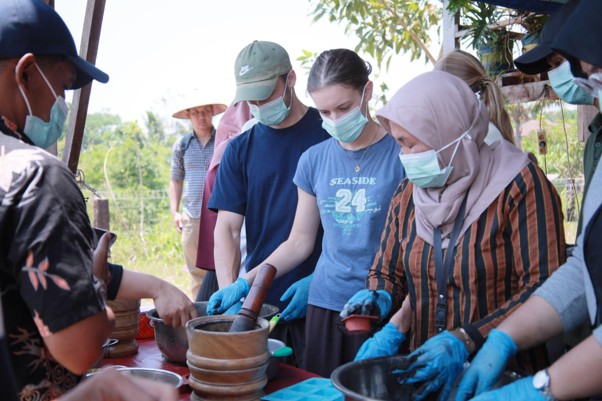
Milk is mixed with other ingredients such as olive oil or lemongrass oil, which serve as aromatic fragrances as well as antiseptics and remedies for itchy skin. The chemical sodium hydroxide (NaOH) is also added as an active ingredient to turn fats, oils, and milk into a solid form.
Other active ingredients are also added to brighten the skin. Once all the ingredients are thoroughly mixed, the mixture is poured into molding trays. The process—from molding to the soap being ready for use—takes approximately 6 months. At the end of the session, participants received a bar of soap as a souvenir.
A New Use for Animal Waste
Next up was an activity to create briquettes from animal excrement. Before beginning the activity, the participants were invited by the Lerep Village administration to take a look inside the goat and sheep farm managed by the village residents.
Prompted by the abundance of animal excrement in Lerep Village, village officials developed products other than fertilizer to manage the animal excrement waste.
The decision was made to produce KoHe (animal excrement) briquettes as an alternative fuel to replace wood charcoal.
The production process begins with the gathering of animal excrement. The excrement is then dried in the sun until it is completely dry, in order to remove its moisture and strong odor.
Once the animal excrement has dried, the next step is roasting. During this process, carbonization happens as the excrement is heated until it is completely dry and takes on a charcoal-like texture. Another goal is to remove the ammonia levels in the excrement so that it is safe to use as fuel.
“This animal excrement must be roasted continuously until it’s dry, stirring constantly to ensure it’s heated evenly—that takes about 2 to 3 hours,” said Sulis.
Only then are the droppings ground into a fine powder, like ash. The next step is to mix the animal excrement powder with a binding mixture, in this case, a mixture of cornstarch and hot water, until it reaches a thick-textured consistency.
The tapioca flour mixture is gradually added, a little at a time, to the animal excrement powder. The mixture is kneaded until it has the desired texture. It is then pressed into molds and left to dry until ready for use.
Learning the Journey from Paddy to Plate
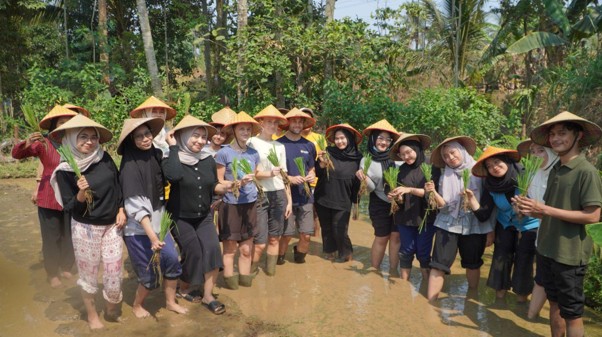
In the next activity, the participants had the experience of plowing a rice paddy with a water buffalo and planting rice in the paddy field.
This activity served as a simple lesson on how the food we consume every day goes through a long process before it reaches our dinner tables.
Through this activity, the students also learned to appreciate the work of farmers. They came to understand that producing rice requires perseverance, hard work, and a process that takes time.
“You can't plant rice while walking forward—you actually have to walk backward, because if you walk forward, the plants will get trampled and ruined,” said Mrs. Sulis.
Although they are stepping back, they are actually moving forward—in the sense that the farmers will eventually reap the harvest. That is, they will harvest rice, be able to eat rice, or sell the rice to meet other needs. The same is true in life: sometimes we have to step back (give in). Give in to win; give in for the greater good.
EVENT GALLERY
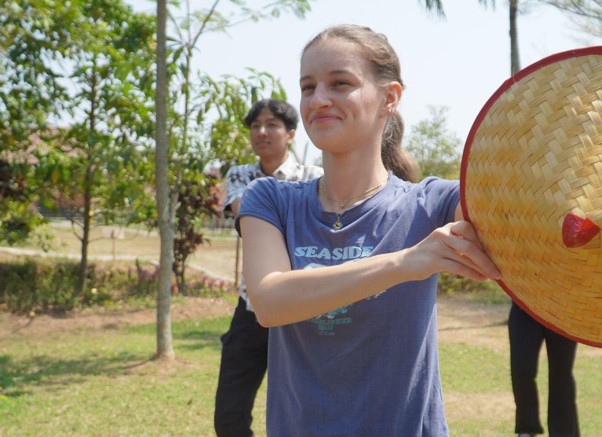
Performing “Caping Gangsing”
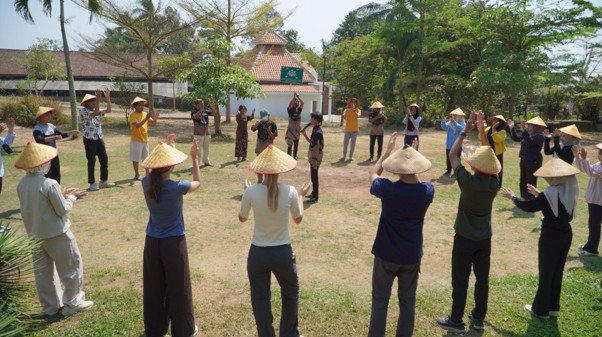
Playing a mini-game
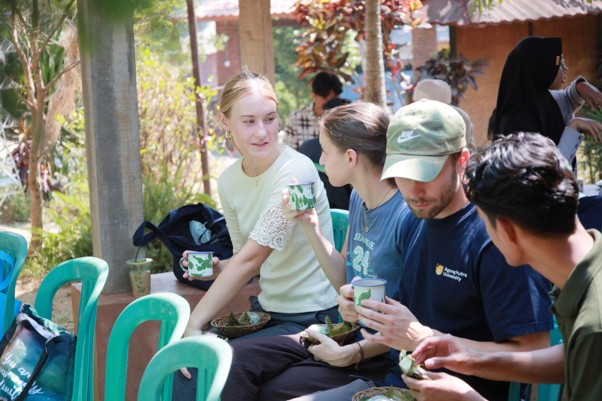
Trying Telang Tea, Klepon and Lemper
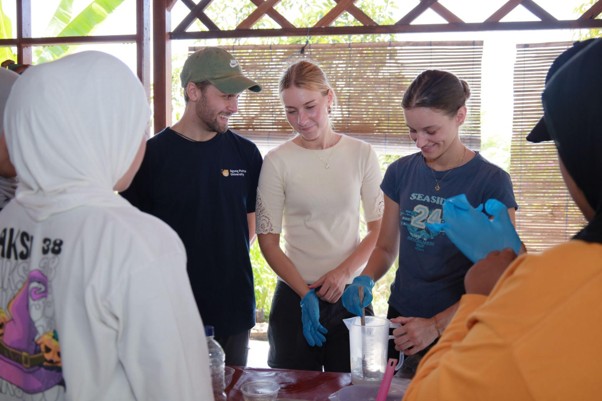
Crafting Milk Soap
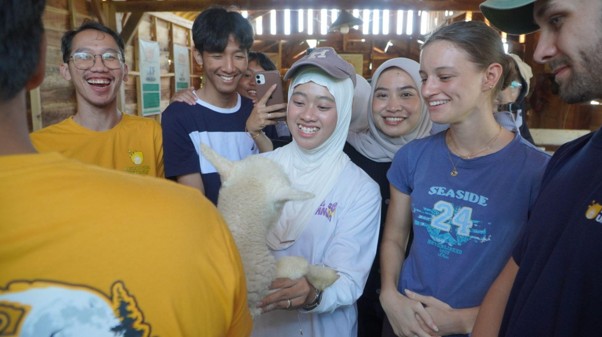
Visit goat and sheep farm
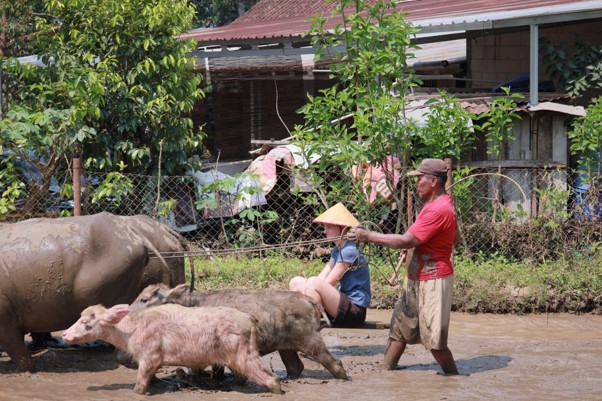
Experience of plowing a rice paddy with a water buffalo and planting rice in the paddy field.
Written by : ANM, APU International Office
Agung Putra University